It's a big day for Shenzhen! To wrap up 2025, four new metro sections officially began passenger service today, December 28th. These extensions add a total of 14 new stations!.
Here's everything you need to know about the new reaches of the network.
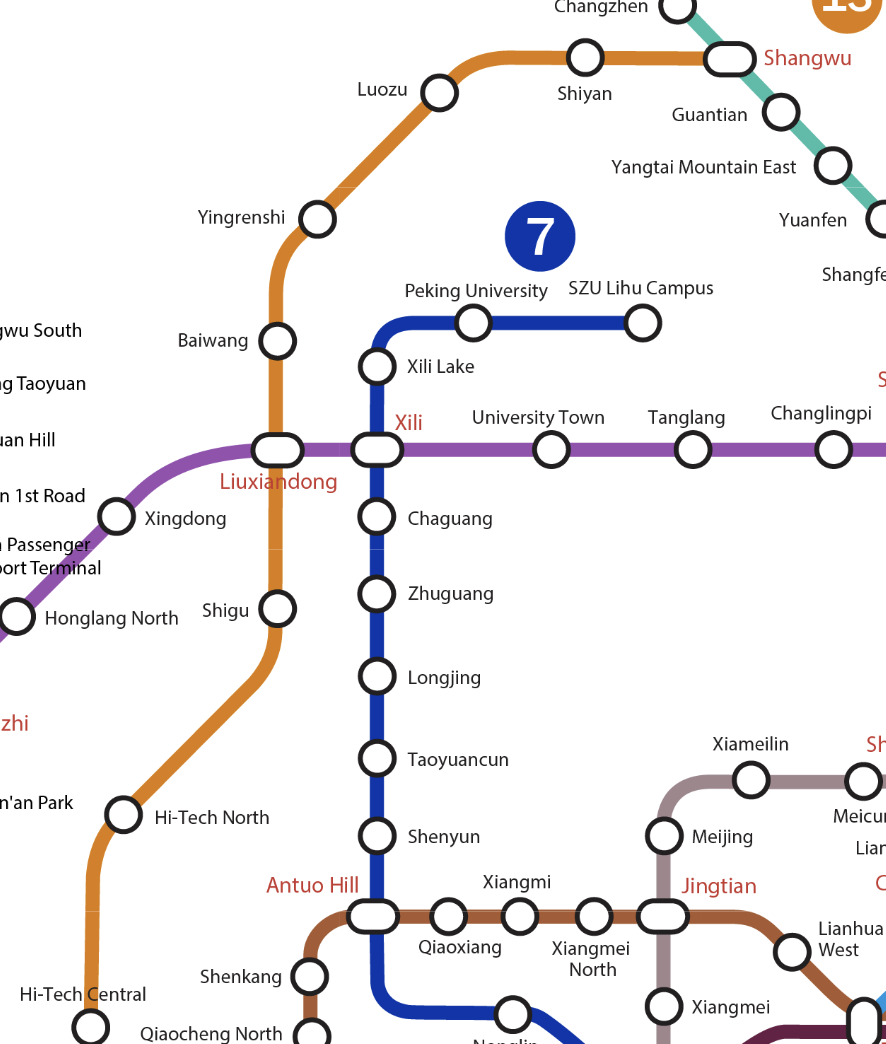
Line 13: The High-Tech Connection (North Section)
The most significant opening today is the Northern Section of Line 13. This 16.1 km stretch connects the Nanshan High-Tech Park area with the Shiyan neighborhood in Bao'an.
The extension adds 9 stations, including major hubs like Liuxiandong (transfer to Line 5) and Shangwu (transfer to Line 6). Note that Xili High-Speed Railway Station will remain an "infill" station for now---trains will pass through without stopping until the massive transport hub above it is completed in a year or two.
Line 8: To the East and Beyond (Phase III)
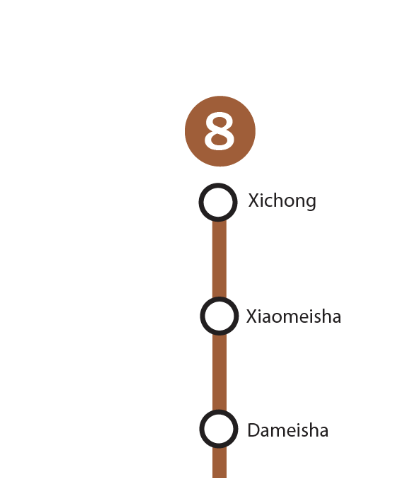
If you're a fan of Shenzhen's eastern coastline, Line 8 just got even better. The Phase III extension pushes past the former terminus at Xiaomeisha all the way to Xichong. This marks the first time a metro line has officially entered the Dapeng New Area. It's just one new station, but it brings the beach much closer to the city center.
Line 5: Into the Heart of Luohu
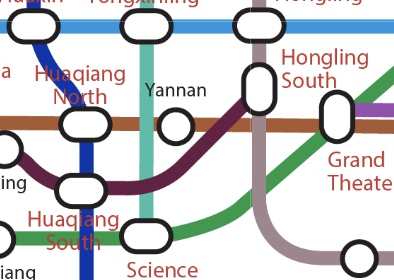
Line 5 has finally reached the historic commercial heart of the city. This 2.88 km extension moves west from Huangbeiling to Grand Theater.
This "small but mighty" extension adds three stations:
Hubei
Dongmen
Grand Theater
This will provide much-needed relief to the transfer bottleneck at Huangbeiling and give residents in the west a direct shot to Luohu's prime shopping districts.
Line 11: Extending the Express
Finally, Line 11 has been extended further east. The new section runs from Huaqiang South to Hongling South, interchanging with Line 9.
Check for updates!
We are currently updating the Explore Shenzhen maps for web, iOS, and Android. You can expect the new stations and updated route-planning to be live within the next 24-48 hours.
The Beijing Subway network has received a big year-end boost for 2025! On December 27, 2025, several highly anticipated projects officially entered service, adding over 30 km of new track and significantly improving cross-city travel for tech and residential hubs.
Here is everything you need to know about the latest expansions.
Line 18
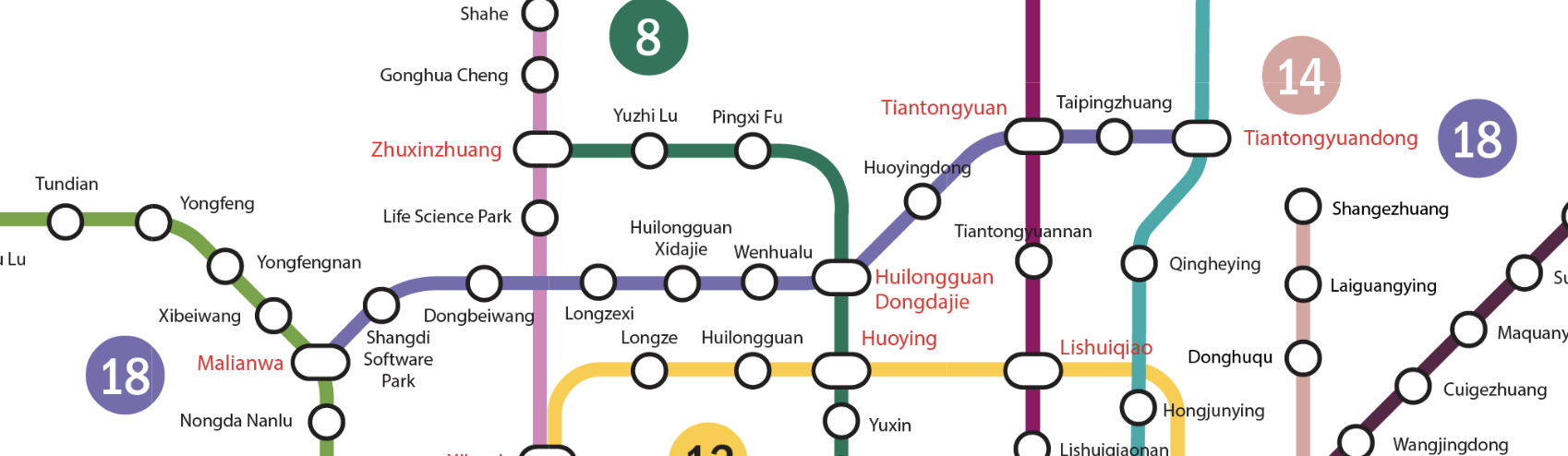
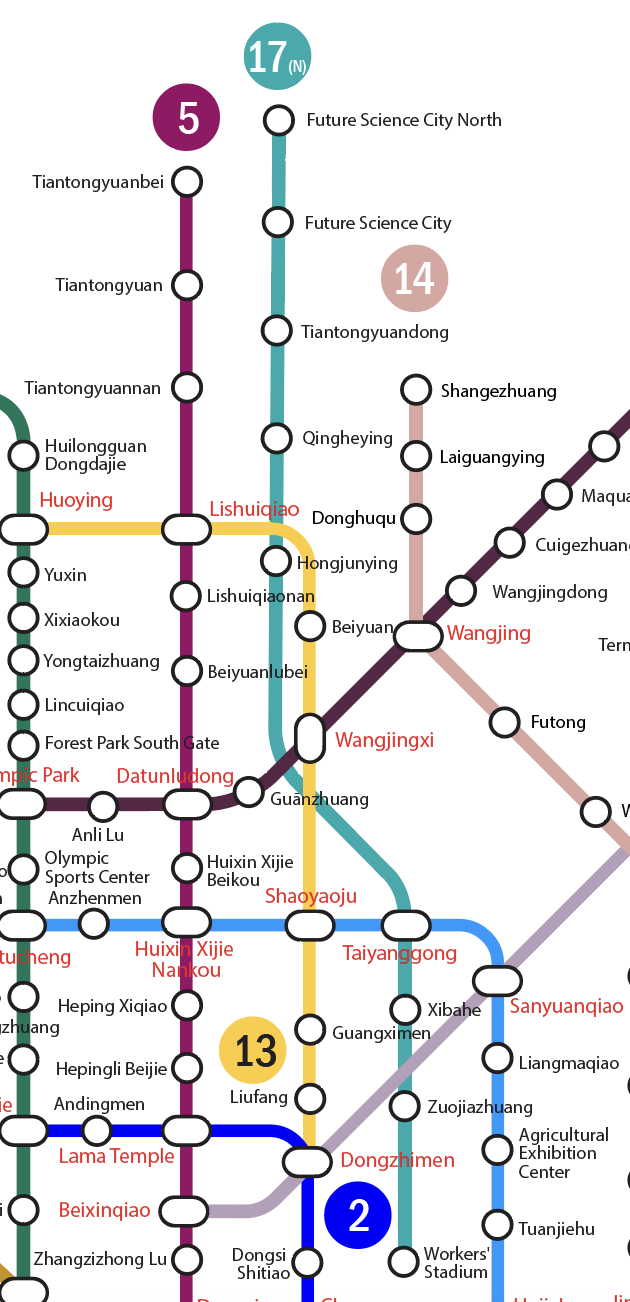
The headline of the month is the opening of Line 18, a 19.8 km corridor connecting Malianwa to Tiantongyuandong.
Line 18 has a complicated history, and will be reconfigured in the future along with Line 13. It provides a direct express link to the Shangdi Software Park, cutting commute times for tech workers.
Key Interchanges: Transfer to Line 16 at Malianwa, Line 8 at Huilongguan Dongdajie, Line 5 at Tiantong Yuan, and Line 17 at Tiantongyuandong.
Line 17: The Middle Section is Complete!
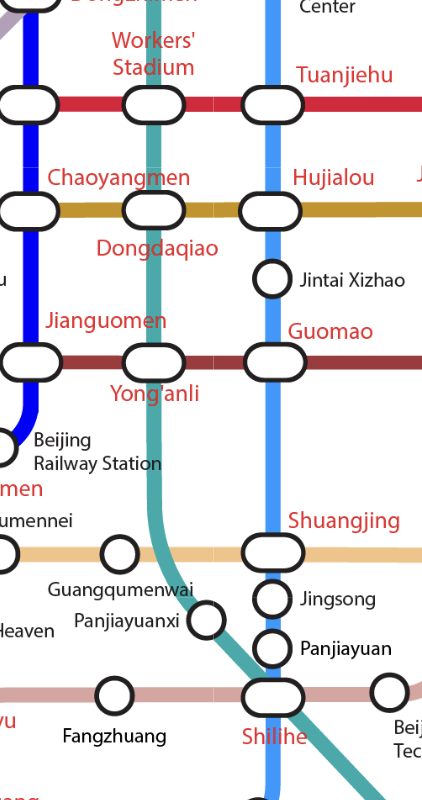
After several years of operating as two separate segments, the Line 17 central section is finally open! The 8.2 km gap between Workers' Stadium and Shilihe has been bridged, creating a seamless north-south express corridor.
Passengers can now travel from Future Science City North all the way to Jiahuihu. This section adds vital transfers at Yong'anli (Line 1) and Dongdaqiao (Line 6).
Note: Connections at Guangqumen Wai and Wangjingxi are not yet open for passenger service on Line 17.
Line 6: One-Station Extension to Luyang
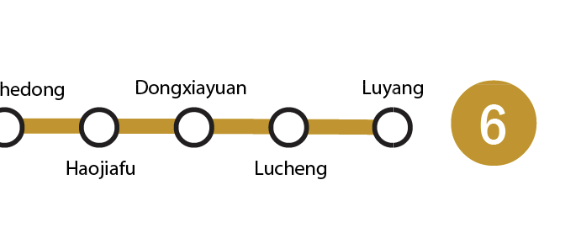
The eastern end of Line 6 has moved one stop further. The line now extends 2.1 km past Lucheng to its new terminus at Luyang.
We have updated our Beijing Subway map and mobile apps with all the new stations, revised travel times, and the latest first/last train information; updates for our iOS and Android apps are rolling out in the next few days.
Shanghai's metro network continues its rapid growth on December 27, 2025 with the opening of the Line 18 Phase II extension. This new 8.1km segment pushes the line further north into the Baoshan District, providing a crucial east-west connection for northern Shanghai.
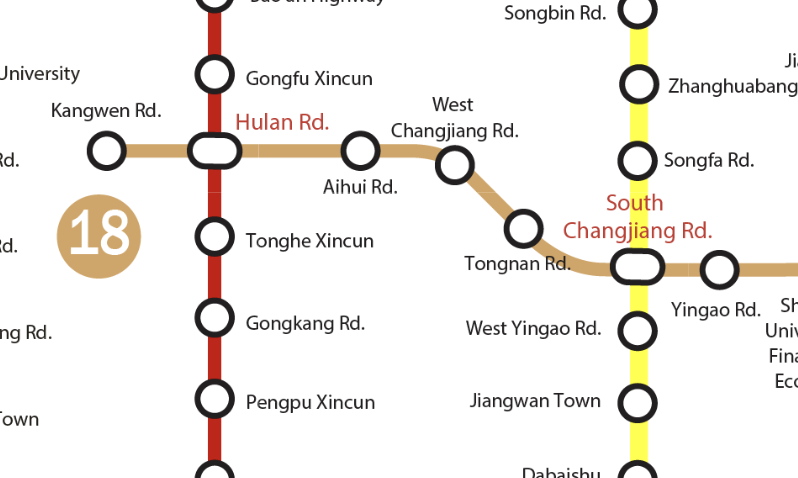
The extension adds five new operational stations to the line, including a major new interchange:
Tongnan Road (通南路)
West Changjiang Road (长江西路)
Aihui Road (爱辉路)
Hulan Road (呼兰路) — Interchange with Line 1
Kangwen Road (康文路) — New Northern Terminus
A sixth station, South Jiangyang Road (江杨南路), has also been constructed but will remain closed for the time being as development continues in the surrounding Wusong Innovation City area. This will later be a interchange with the future Line 19.
Better connectivity for Baoshan
The highlight of this extension is the new transfer at Hulan Road, which allows passengers to switch between Line 18 and Line 1. This provides a much-needed alternative for commuters in northern Shanghai to reach the Pudong New Area without traveling through the congested city center.
Now live on Explore Shanghai
We have updated our interactive Shanghai Metro map with the new stations and interchange. Updates for our iOS and Android apps are rolling out now—look for the update in the App Store or Google Play to get the latest maps and route planning on your device!
In September 2024 the Shanghai Metro announced a number of station renamings. Some of these include stations which have been unchanged for decades, so let's find out why!
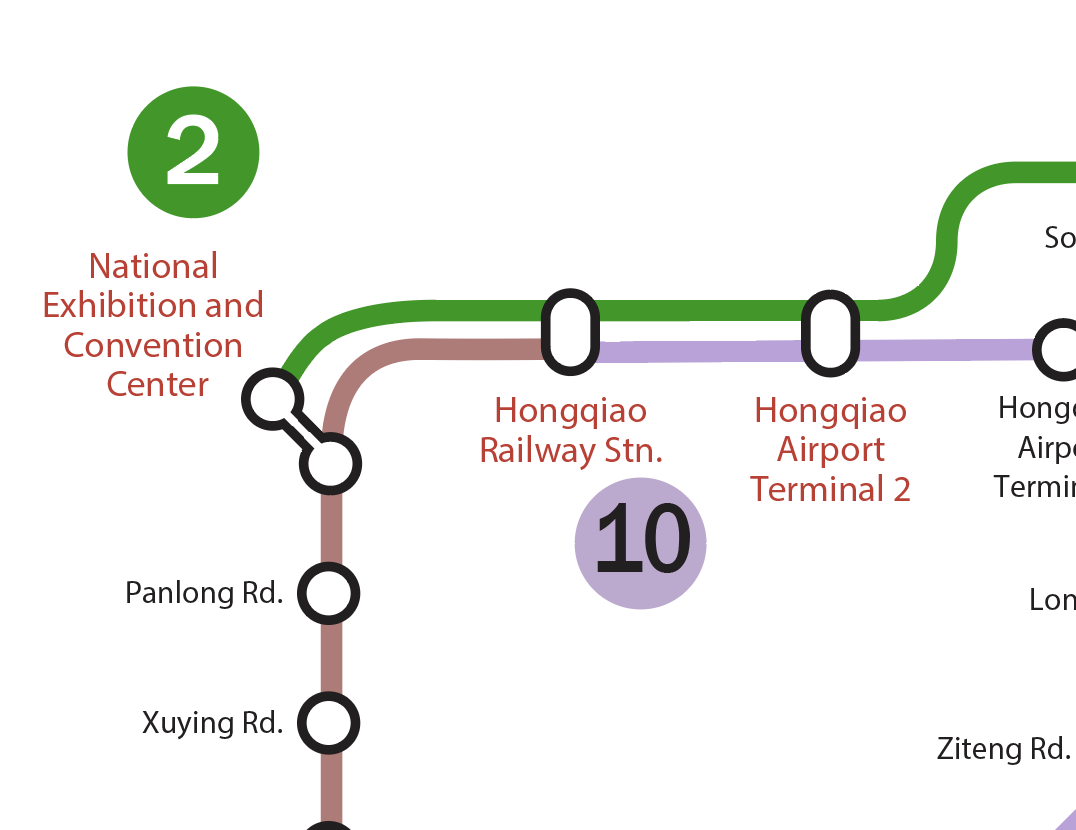
First up, East Xujing (徐泾东) which opened in 2010 on Line 2, as well as Zhuguang Road (诸光路) which opened in in 2017 on Line 17, have both been renamed to National Exhibition and Convention Center (国家会展中心站). This is in preparation for it becoming a full interchange station once the extension to Line 13 also opens here in future.
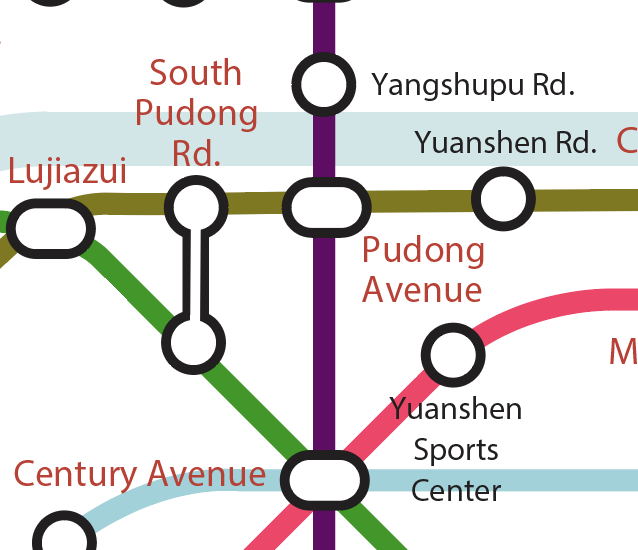
Similarly, Dongchang Road (东昌路), which opened in 1999 on Line 2, has been renamed to South Pudong Road (浦东南路), to match the existing name of the station on Line 14 which opened in 2021.
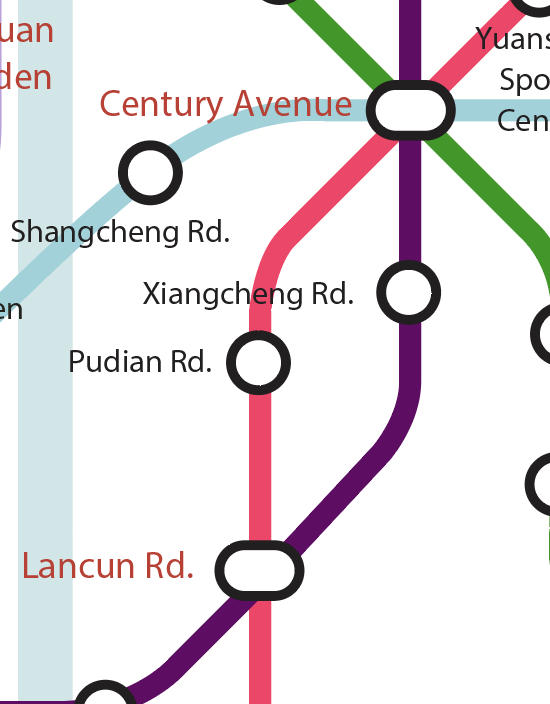
In 2005, a station called Pudian Road (浦电路) opened on Line 4 and in 2007, another station called Pudian Road opened on Line 6, however confusingly there was never an interchange between the two. After 17 years this anomaly has been fixed, with the Line 4 station now renamed to Xiangcheng Road (向城路).
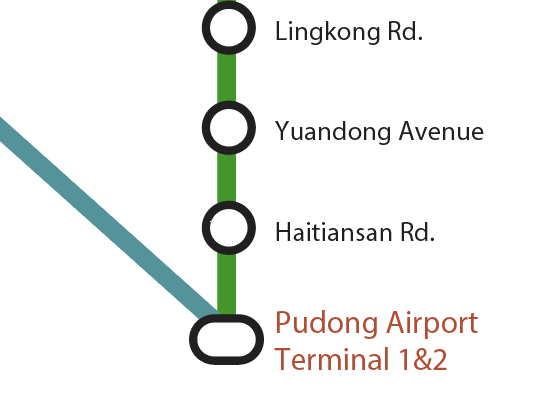
As there are plans for a new station at the new Pudong Airport Terminal 3, the existing Pudong International Airport (浦东国际机场) stations on the Maglev and Line 2, which opened in 2002 and 2010 respectively, have been renamed to Pudong Airport Terminal 1&2 (浦东1号2号航站楼).
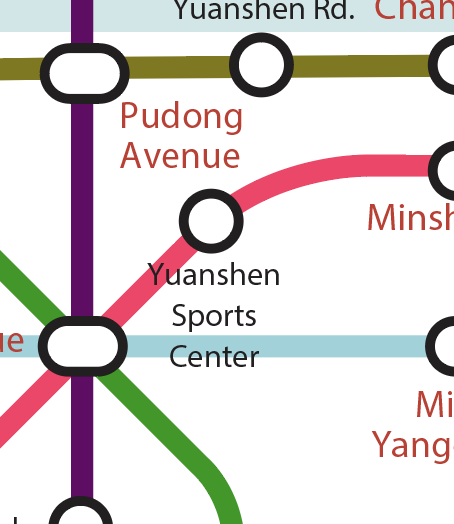
Yuanshen Stadium on Line 6 has been renamed to Yuanshen Sports Center to better match the Chinese name of 源深体育中心.
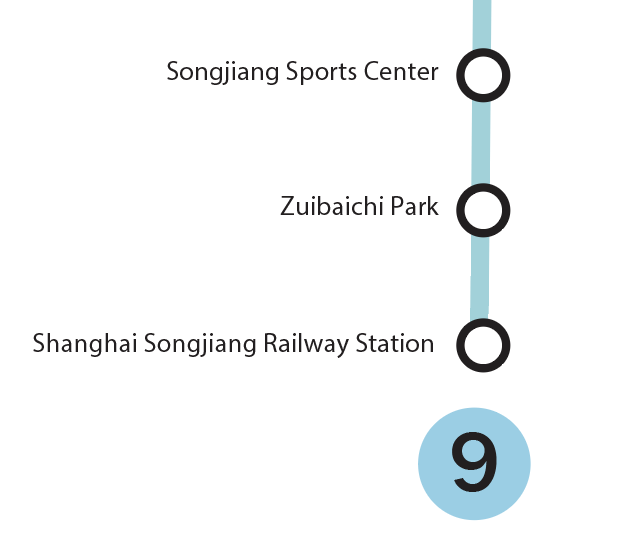
Songjiang South Railway Station (松江南站) which opened in 2012 on Line 9 has been renamed to Shanghai Songjiang Railway Station (上海松江站) to match the name of the attached railway station which was renamed in May 2024.
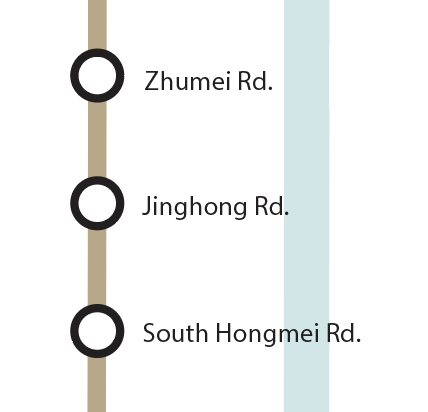
Finally West Huajing (华泾西) which opened in 2021 on Line 15 has been renamed to Jinghong Road (景洪路), matching the name of a future station on the Airport Link Line which it will interchange with.
These new names are live on exploreshanghai.com and updates to our iOS and Android apps will be available soon.
As usual, there are several new extensions openings in China at the end of the year.
Beijing Metro Expansions
The capital city is gearing up for significant additions to its metro network by the end of December. This will extend the system from 807 km to 836 km, overtaking Shanghai again!
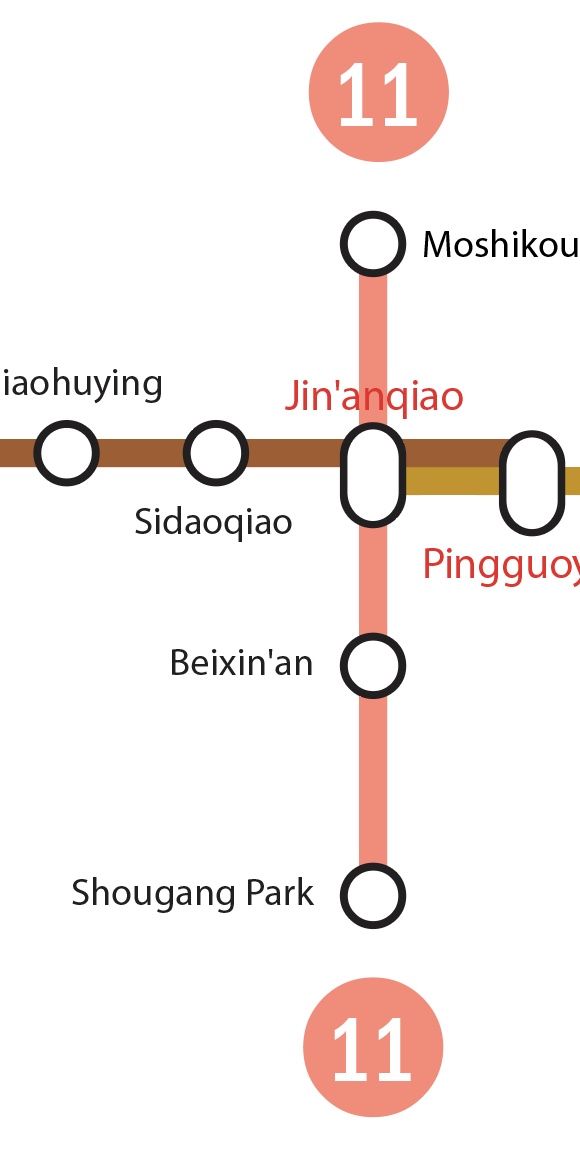
Line 11 Extension: Just one extra station, extending from Jin'anqiao to Moshikou
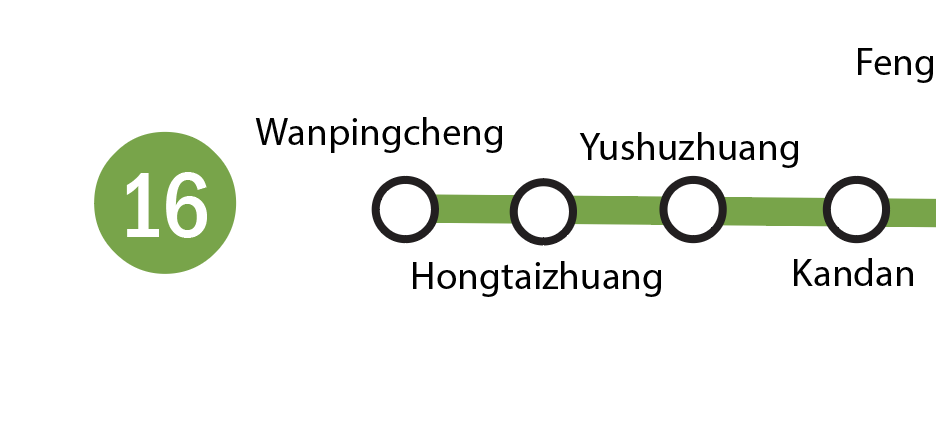
Line 16 Expansion: The extension from Yushuzhuang will now include two new stations - Hongtaizhuang and Wanpingcheng
Line 17 New Route: A brand new segment from Workers Stadium to Future Science City North. This will run seperately from the existing southern section of Line 17 for now, with the middle section opening later.
Interchange at Suzhou Jie: A new interchange will open between Lines 10 and 16 at Suzhou Jie
Small but beautiful, the Line 11 extension
Two new stations on Line 16
New Line 17 segment
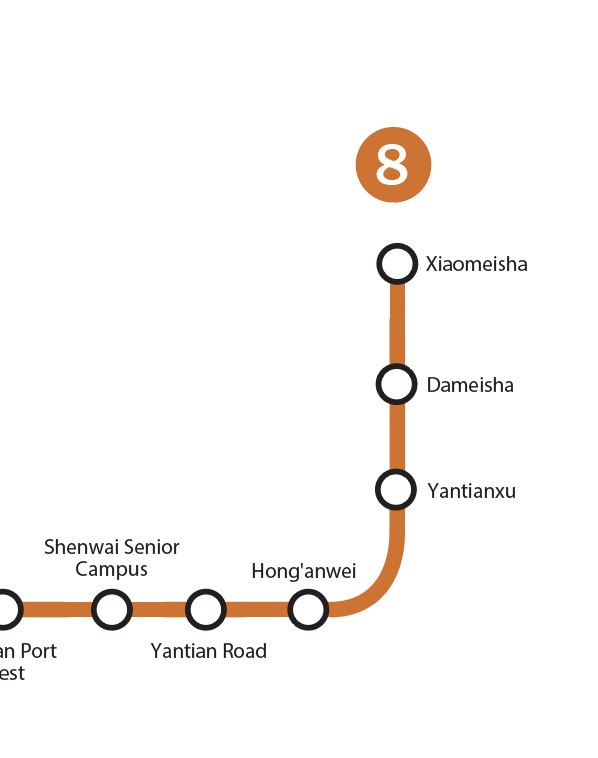
Shenzhen Line 8 Extension
Opening Date: 27th December 2023
Line 8 Extension: This extension runs from Yantian Road to Xiaomeisha, covering a distance of approximately 8 kilometers
More stations on the east end of Line 8
Guangzhou Metro Additions
Opening Date: 28th December 2023
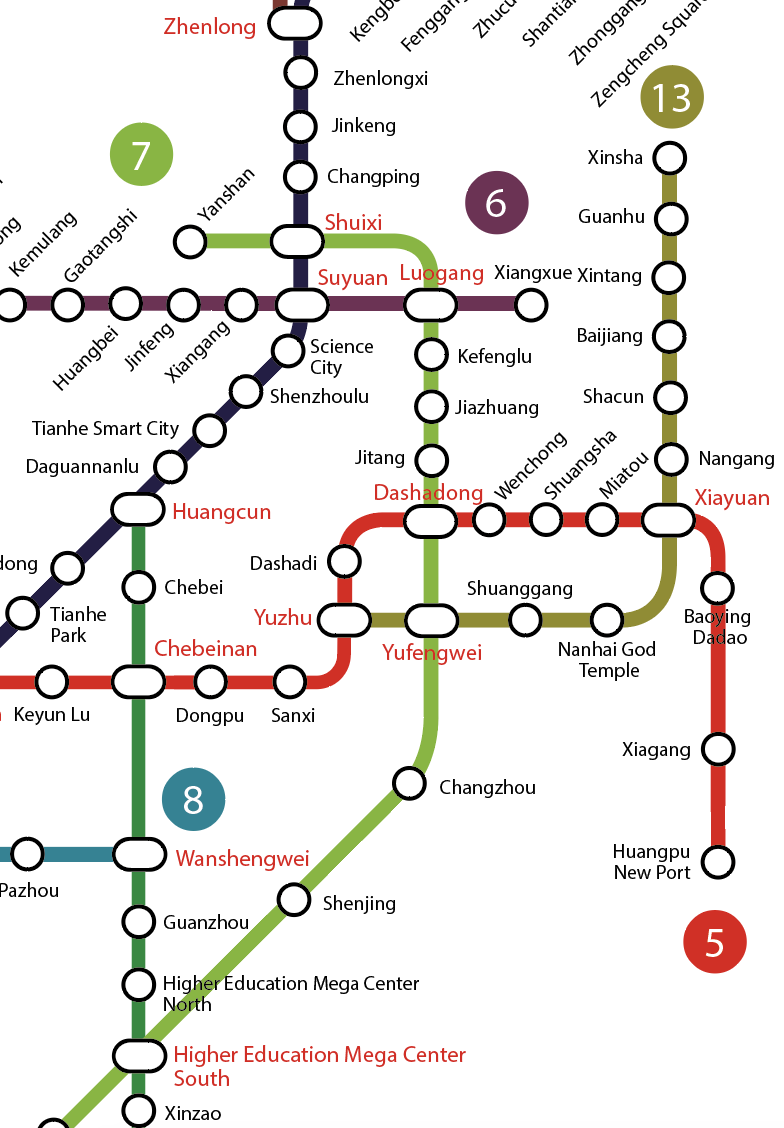
Line 5 Extension: A new stretch Wenchong to Huangpu New Port, spanning 9.8 kilometers.
Line 7 Extension: A 19.9-kilometer extension from Higher Education Mega Center South to Yanshan
Several new stations on Line 7 and Line 5 give a new look to the east side of the GZ Metro Map
The new extensions to Line 5 and Line 7 introduce a number of new interchanges such as Xiayuan (5/13), Yufengwei (7/13), Dashadong (5/7), Luogang (6/7) and Shuixi (7/21).
As usual expect updates to our iOS apps, Android apps and website shortly.
As usual, many of the metro systems around Asia are opening new lines and extensions in the last few days of the year. I'm working hard to get the different maps updated as soon as possible, please bear with me as ExploreMetro is a one-person operation, and I have a newborn baby to look after :) Apple also shut down the submission of new apps over Christmas, so there's a backlog to get new apps approved.
Here's a summary of the lines and extensions already open during December 2019/January 2020 and the current status on the ExploreMetro apps. If you think I missed anything, please shoot me an email to support@exploremetro.com
Updated now on all platforms:
Bangkok - 04 Dec 2019 - Sukhumvit Line, Ha Yaek Lat Phrao - Kasetsart University MAPS UPDATED on web, iOS and Android!
Bangkok - 04 Dec 2019 - Blue Line, Tao Poon - Sirindhorn MAPS UPDATED on web, iOS and Android!
Shenzhen - 08 Dec 2019 - Line 9, Hongshuwan South - Qianwan MAPS UPDATED on web, iOS and Android!
Guangzhou 20 Dec 2019 - Line 21, Yuancun - Zhenlongxi MAPS UPDATED on web, iOS and Android
Bangkok - 23 Dec 2019 - Blue Line, Sirindhorn - Tha Phra MAPS UPDATED on web and iOS and Android
Beijing - 28-30 Dec 2019, Line 7, Jiaohuachang - Huazhuang + Shuangjing and Batong Line, Tuqiao - Huazhuang, Line 13 Qinghe station MAPS UPDATED on web, iOS and Android!
Guangzhou - 28 Dec 2019, Line 8, Fenghuang Xincun - Cultural Park MAPS UPDATED on web, iOS and Android!
Taipei - 19 Jan 2020, Circular Line (Yellow) - New Taipei Industrial Park to Dapinglin MAPS UPDATED on web, Android and iOS!
Singapore - 31 Jan 2020, Thomson–East Coast Line, Woodlands North - Woodlands South MAPS UPDATED on web, Android and iOS!
Opening soon:
Hong Kong - 14 Feb 2020, Tuen Ma Line, Tai Wai to Kai Tak
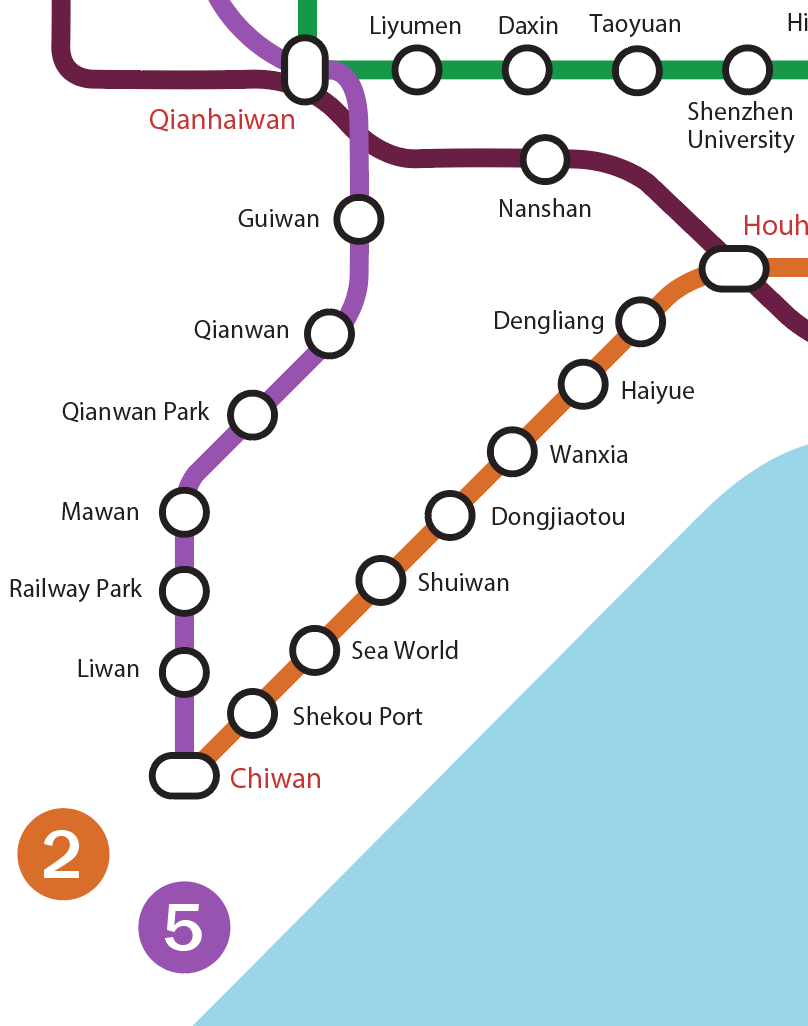
Shenzhen's Metro received its first extension for three years with the September 28, 2019 opening of the Line 5 extension. The 7.7km extension continues from Qianhaiwan station, an existing interchange with Line 1 and 11, via six new stations, to a new interchange with Line 2 at Chiwan.
The line will reduce travel times between Bao’an, Qianhai, and Shekou. In future, there will be additional interchanges to Line 9 at Qianwan station and Line 15 at Railway Park Station.
Our online Shenzhen metro map is already updated, and there will be updates for our iOS and Android apps shortly!
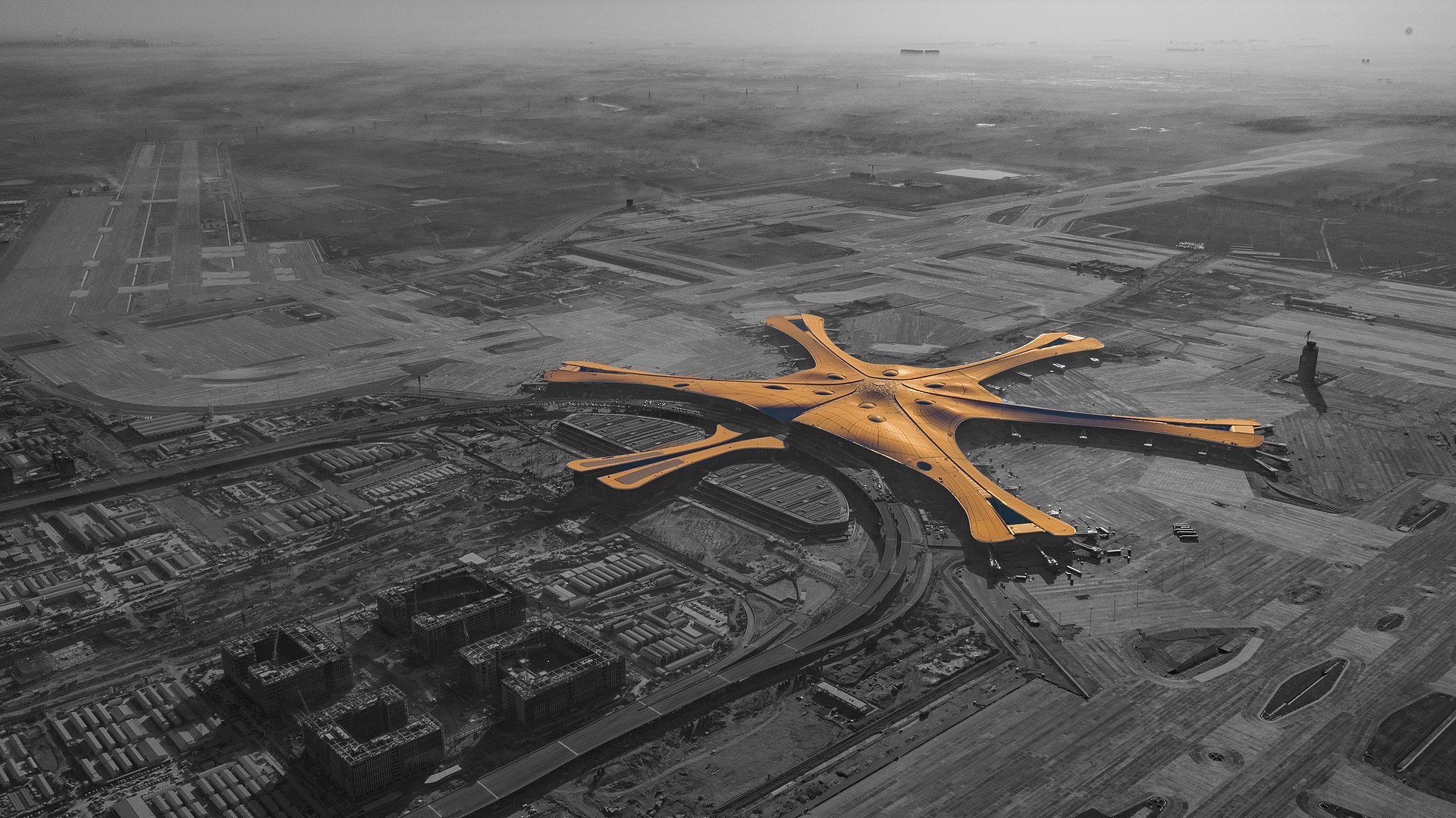
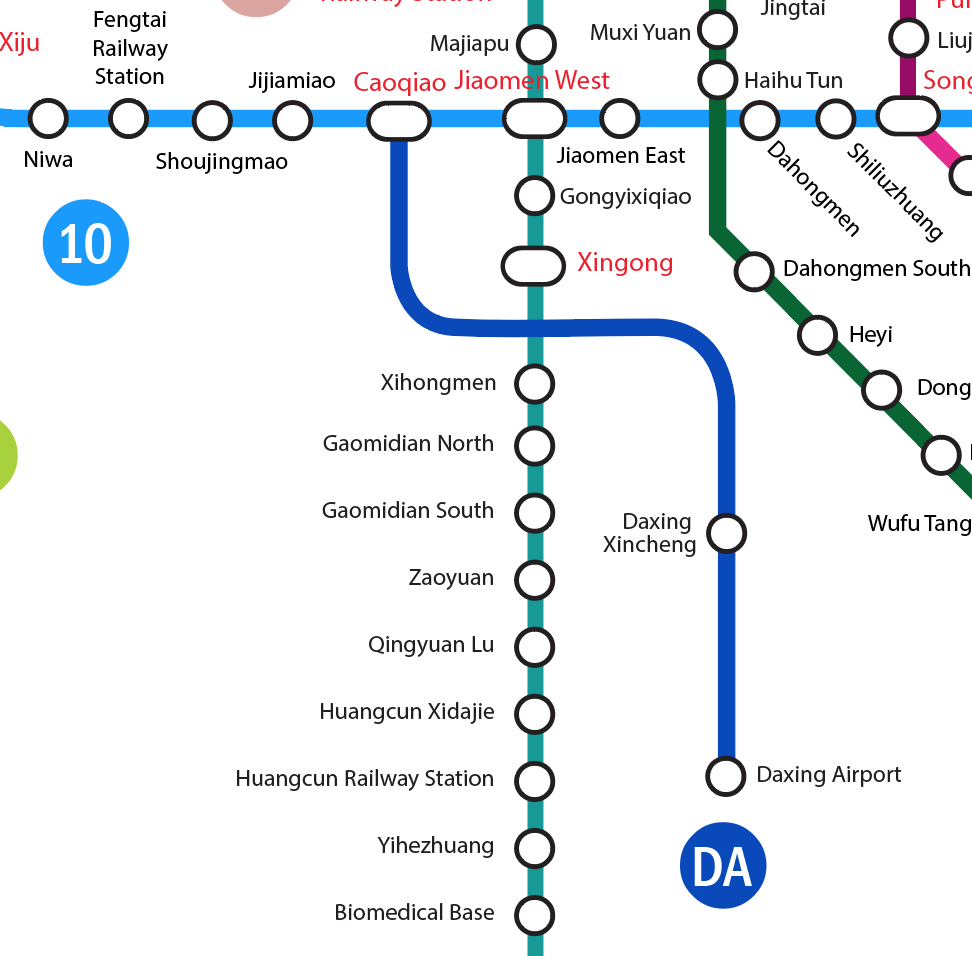
On September 28, 2019 a new express metro line opened in Beijing linking to the new Daxing Airport. The Daxing Airport Express runs from Caoqiao on the Third Ring Road, an interchange with Line 10, to Daxing Airport, a total of about 40km, with a single journey taking about 30 minutes. There is one intermediate stop at Daxing Xincheng. A single journey from Caoqiao to the airport costs 35 RMB.
The line is colored blue on the map:
To avoid confusion, the Airport Express train to the existing Beijing Capital Airport will now be referred to as the Capital Airport Express.
We've already updated our online Beijing Subway map with the new line, and updates to our iOS and Android apps will be available soon.
The idea of a flat fare for Bangkok public transport has recently resurfaced. Since the operation of the BTS and MRT is contracted out to private companies (BTS Group, and Bangkok Expressway and Metro PCL respectively), this would likely only be possible if the government agreed to subsidize the private operators for the loss of farebox revenue.
Let's do some back of the envelope calculations on how much this would cost based on publically available information from the BTS and MRT.
The BTS Skytrain carries around 240 million trips per year, with farebox revenue of THB 7 billion, an average fare of fare THB 29 per trip.
The MRT carries around 115 million trips per year, with farebox revenue of about THB 3 billion and an average fare of about THB 25.
If there was a flat fare of 15 baht, and the government to fully reimburse the private operators for the cost of each trip, then each journey would need to be subsidised by about 14 baht on the BTS and 10 baht on the MRT, a total subsidy of about 4.5 billion baht. About 75% of the subsidy would be for the BTS, due to higher ridership and higher fares.
However this assumes that lower fares would have no effect on ridership numbers. In practice, we could realistically assume a 10-20% increase in ridership after a fare cut, bringing the subsidy above 5 billion per annum. The opening of future lines like the Yellow and Pink lines will further increase ridership.
How could the cost of the subsidy be limited? There are two obvious ways. First it's likely the government could agree a lower subsidy per ride in exchange for the future increase of passenger numbers. Second, the flat fare could be slightly higher. A flat fare of 20 baht instead of 15 baht would only require a subsidy of 2.7 billion baht instead of 4.5 billion baht.
Is this worth it? The pros and cons of subsidised public transportation have been debated at length. It's clear that Bangkok suffers from heavy negative externalities from excessive motorbike and car use in the form of heavy pollution and congestion, so if the fare cut could bring commuters off the roads and onto public transport, perhaps. A 2016 study found the economic costs of Bangkok's traffic was 11 billion baht per year.
In August 2019 two of Bangkok's mass transit lines will receive extensions.
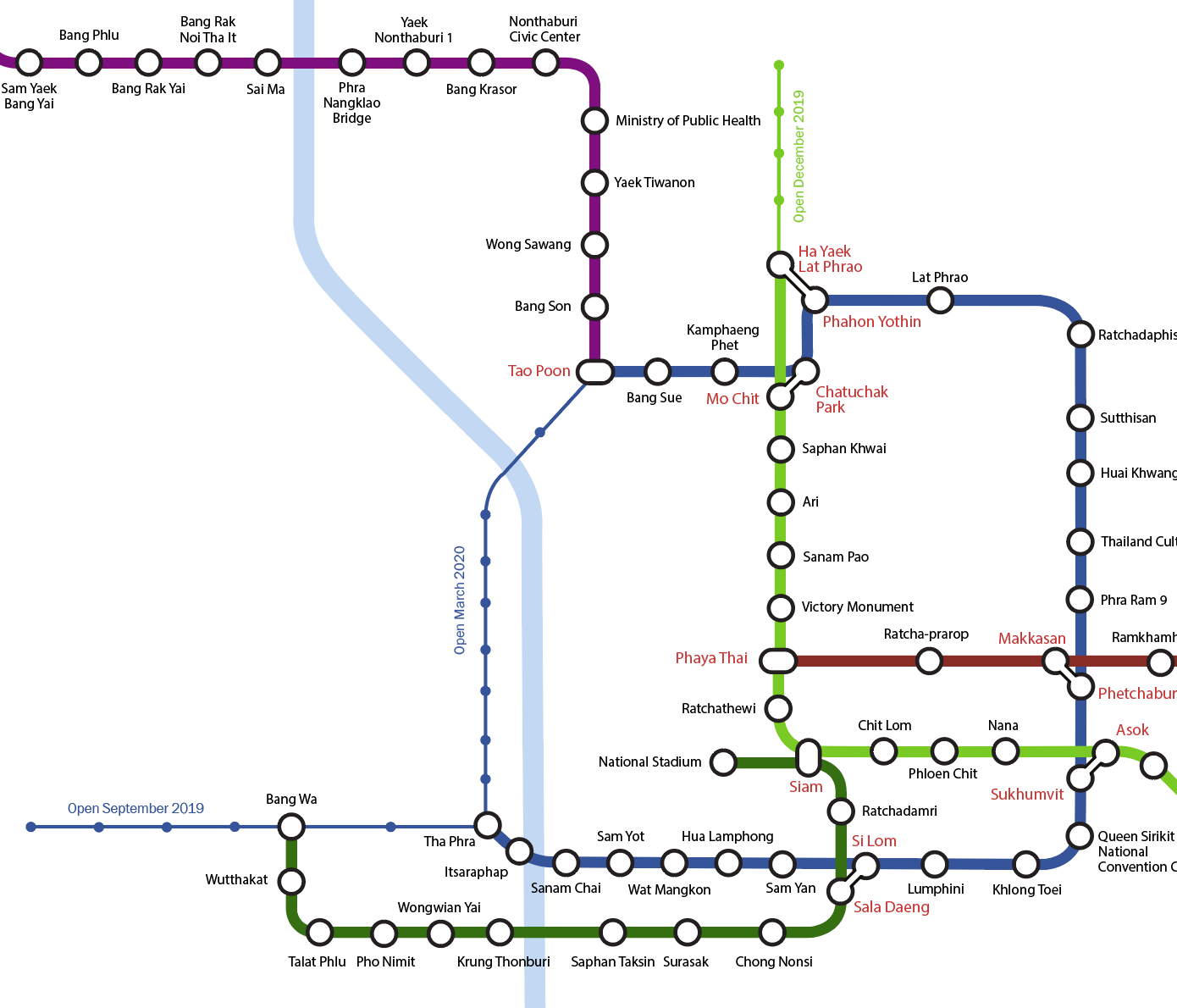
First, the MRT Blue Line will be extended by 5 stations to the west of its current terminus at Hua Lampong: calling at Wat Mangkon, Sam Yot and Sanam Chai, before crossing the river with further stops at Itsaraphap and Tha Phra.
It will be free to take rides on the MRT between Wat Mangkon and Tha Phra during the test runs.
Several of the new stations have impressive designs, such as the Wat Mangkon station (in Bangkok's Chinatown) which is modelled after a Chinese temple.
This is just the first phase of ambitious expansion plans for the MRT Blue Line in the next 12 months. In September, it's planned to open a further 6-station extension west from Tha Phra to Lak Song. This extension will interchange with the BTS Silom Line at Bang Wa.
Additionally, in March 2020, another branch will run north from Tha Phra to Tao Poon, finally completing the Blue Line's circular loop.
Separately this August, the BTS Sukhumvit Line will be extended by one station north of the current terminus at Mo Chit, to Ha Yaek Lat Phrao (Lat Phrao Interchange). This station will provide an additional interchange with the MRT Blue Line at Phahon Yothin station.
It's nice to see Bangkok's metro lines finally extending, and more importantly interchanging with each other! Look out for updates to our Bangkok BTS/MRT map online, on iOS and Android soon!