Can't get enough of ExploreMetro ;)?
As well as our Facebook, Twitter and Weibo you can now +1 us on Google+!

Can't get enough of ExploreMetro ;)?
As well as our Facebook, Twitter and Weibo you can now +1 us on Google+!
Beijing Subway Line 8 has been temporarily closed. The current four-station line runs from Beitucheng through the Olympic Green to
South Gate of Forest Park. Don't panic, the reason for the closure is the impending opening of Line 8, phase 2! The second phase, scheduled to open in late December, will extend the line to the north, with additional interchanges with the Changping Line and Line 13. The full list of new stations is listed below.
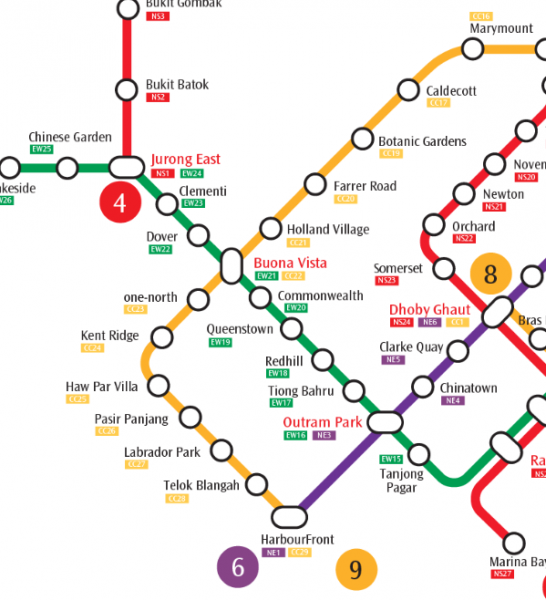
The Singapore MRT's Circle Line new extension will open tomorrow, October 8. The new stations extend the line from Marymount to Harbourfront where you can interchange with the North-East Line. There's another new interchange at Buona Vista with the East-West Line.
An update for our Explore Singapore MRT map is now available on the iTunes App Store. It's a free update for all users who have purchased the app in the past! Our online map www.exploresg.com has also been updated with the new stations.
Note this is a beta release - we don't yet have some information for the new stations, such as first/last train times and journey costs. We'll provide a new update as soon as we get this information added.
Happy Mid-Autumn festival to all ExploreMetro fans! Here's a special holiday treat for you metro-lovers. We've made an anagrammed version of the 2011 Shanghai Metro map, scrambling the letters of the English names of all stations for comic effect.
Click below for the full PDF metro map, here are some of our favorites:
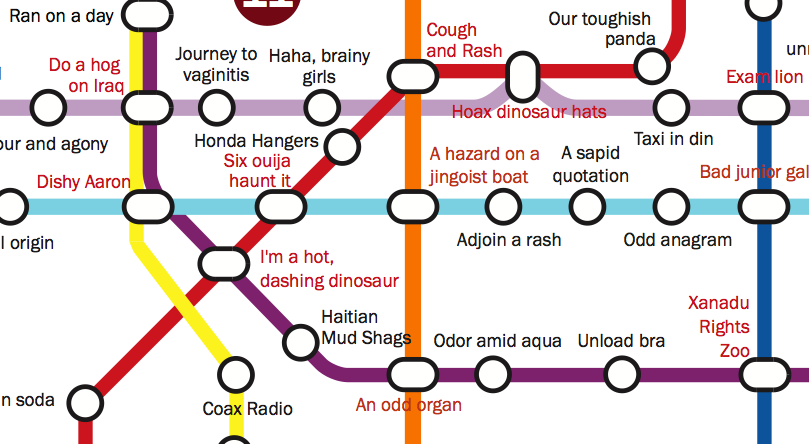
Back in 2008 I created the first anagrammed map of the Shanghai Metro. Since then the Shanghai Metro has added lots of new stations and lines and is now the longest metro system in the world, so I thought it was about time to bring the anagram map up to date!
Note for pedants: I used the common English name of the station as posted on signboards, spelling out directions e.g. South Lingyan Road. For some challenging stations (particularly the ones with lots of Xs and Zs I added "station" e.g. Dongjing Station -> Standing, I jog not.)
The Shanghai Metro company announced that Shanghai Metro Line 2 will have increased service from Thursday 1st September!
More frequent trains!
Longer hours!
We've updated our online metro map with all the latest train times. An update to our Explore Shanghai Metro app for iPhone will be available shortly!
We need your help! We’re planning to add Pinyin names to our metro maps to help you pronounce metro station names more easily. After your great help on the Shanghai names, we need your help to check the accuracy of the Beijing Subway transliterations. Take a look over the list of Beijing Subway stations below, and if you see any errors in the pinyin column, leave us a comment! In particular: * Do all syllables have the correct pinyin, including tone mark? * Are the word boundaries correct? The Beijing Subway tends to run multiple words together in Pinyin. We've tried to use more logical word breaks where possible.
| English | Chinese | Pinyin |
|---|---|---|
| Pingguoyuan | 苹果园 | Píngguǒyuán |
| Gucheng | 古城 | Gǔchéng |
| Bajiao Amusement Park | 八角游乐园 | Bājiǎo Yóulèyuán |
| Babaoshan | 八宝山 | Bābǎoshān |
| Yuquanlu | 玉泉路 | Yùquán Lù |
| Wukesong | 五棵松 | Wǔkēsōng |
| Wanshoulu | 万寿路 | Wànshòu Lù |
| Gongzhufen | 公主坟 | Gōngzhǔfén |
| Military Museum | 军事博物馆 | Jūnshì Bówùguǎn |
| Muxidi | 木樨地 | Mùxīdì |
| Nanlishilu | 南礼士路 | Nánlǐshì Lù |
| Fuxingmen | 复兴门 | Fùxīngmén |
| Xidan | 西单 | Xīdān |
| Tian'anmen West | 天安门西 | Tiān'ānmén Xī |
| Tian'anmen East | 天安门东 | Tiān'ānmén Dōng |
| Wangfujing | 王府井 | Wángfǔjǐng |
| Dongdan | 东单 | Dōngdān |
| Jianguomen | 建国门 | Jiànguómén |
| Yonganli | 永安里 | Yǒng'ānlǐ |
| Guomao | 国贸 | Guómào |
| Dawanglu | 大望路 | Dàwàng Lù |
| Sihui | 四惠 | Sìhuì |
| Sihui East | 四惠东 | Sìhuì Dōng |
| Xizhimen | 西直门 | Xīzhímén |
| Chegongzhuang | 车公庄 | Chēgōngzhuāng |
| Fuchengmen | 阜成门 | Fùchéngmén |
| Changchunjie | 长椿街 | Chángchūn Jiē |
| Xuanwumen | 宣武门 | Xuānwǔmén |
| Hepingmen | 和平门 | Hépíngmén |
| Qianmen | 前门 | Qiánmén |
| Chongwenmen | 崇文门 | Chóngwénmén |
| Beijing Railway Station | 北京站 | Běijīng Zhàn |
| Chaoyangmen | 朝阳门 | Cháoyángmén |
| Dongsi Shitiao | 东四十条 | Dōngsì Shítiáo |
| Dongzhimen | 东直门 | Dōngzhímén |
| Yonghegong Lama Temple | 雍和宫 | Yōnghégōng |
| Andingmen | 安定门 | Āndìngmén |
| Guloudajie | 鼓楼大街 | Gǔlóu Dàjiē |
| Jishuitan | 积水潭 | Jīshuǐtán |
| Tiantongyuan North | 天通苑北 | Tiāntōngyuàn Běi |
| Tiantongyuan | 天通苑 | Tiāntōngyuàn |
| Tiantongyuan South | 天通苑南 | Tiāntōngyuàn Nán |
| Lishuiqiao | 立水桥 | Lìshuǐqiáo |
| Lishuiqiao South | 立水桥南 | Lìshuǐqiáo Nán |
| Beiyuanlu North | 北苑路北 | Běiyuànlù Běi |
| Datunlu East | 大屯路东 | Dàtún Lù Dōng |
| Huixinxijie Beikou | 惠新西街北口 | Huìxīn Xījiē Běikǒu |
| Huixinxijie Nankou | 惠新西街南口 | Huìxīn Xījiē Nánkǒu |
| Hepingxiqiao | 和平西桥 | Hépíngxīqiáo |
| Hepinglibeijie | 和平里北街 | Hépínglǐ Běijiē |
| Beixinqiao | 北新桥 | Běixīnqiáo |
| Zhangzizhonglu | 张自忠路 | Zhāng Zìzhōng Lù |
| Dongsi | 东四 | Dōngsì |
| Dengshikou | 灯市口 | Dēngshìkǒu |
| Ciqikou | 磁器口 | Cíqìkǒu |
| Tiantandongmen | 天坛东门 | Tiāntándōngmén |
| Puhuangyu | 蒲黄榆 | Púhuángyú |
| Liujiayao | 刘家窑 | Liújiāyáo |
| Songjiazhuang | 宋家庄 | Sòngjiāzhuāng |
| Beitucheng | 北土城 | Běitǔchéng |
| Olympic Sports Center | 奥体中心 | Àotǐ Zhōngxīn |
| Olympic Green | 奥林匹克公园 | Àolínpǐkè Gōngyuán |
| South Gate of Forest Park | 森林公园南门 | Sēnlín Gōngyuán Nánmén |
| Bagou | 巴沟 | Bāgōu |
| Suzhoujie | 苏州街 | Sūzhōu Jiē |
| Haidian Huangzhuang | 海淀黄庄 | Hǎidiàn Huángzhuāng |
| Zhichunli | 知春里 | Zhīchūnlǐ |
| Zhichunlu | 知春路 | Zhīchūn Lù |
| Xitucheng | 西土城 | Xītǔchéng |
| Mudanyuan | 牡丹园 | Mǔdānyuán |
| Jiandemen | 建德门 | Jiàndémén |
| Anzhenmen | 安贞门 | Ānzhēnmén |
| Shaoyaoju | 芍药居 | Sháoyàojū |
| Taiyanggong | 太阳宫 | Tàiyánggōng |
| Sanyuanqiao | 三元桥 | Sānyuánqiáo |
| Liangmaqiao | 亮马桥 | Liàngmǎqiáo |
| Agricultural Exhibition Center | 农业展览馆 | Nóngyè Zhǎnlǎnguǎn |
| Tuanjiehu | 团结湖 | Tuánjiéhú |
| Hujialou | 呼家楼 | Hūjiālóu |
| Jintaixizhao | 金台夕照 | Jīntái Xìzhào |
| Shuangjing | 双井 | Shuāngjǐng |
| Jinsong | 劲松 | Jìnsōng |
| Dazhongsi | 大钟寺 | Dàzhōngsì |
| Wudaokou | 五道口 | Wǔdàokǒu |
| Shangdi | 上地 | Shàngdì |
| Xi'erqi | 西二旗 | Xī'èrqí |
| Longze | 龙泽 | Lóngzé |
| Huilongguan | 回龙观 | Huílóngguān |
| Huoying | 霍营 | Huòyíng |
| Beiyuan | 北苑 | Běiyuàn |
| Wangjing West | 望京西 | Wàngjīng Xī |
| Guangximen | 光熙门 | Guāngxīmén |
| Liufang | 柳芳 | Liǔfāng |
| Gaobeidian | 高碑店 | Gāobēidiàn |
| Communication University of China | 广播学院 | Guǎngbò Xuéyuàn |
| Shuangqiao | 双桥 | Shuāngqiáo |
| Guanzhuang | 管庄 | Guǎnzhuāng |
| Baliqiao | 八里桥 | Bālǐqiáo |
| Tongzhou Beiyuan | 通州北苑 | Tōngzhōu Běiyuàn |
| Guoyuan | 果园 | Guǒyuán |
| Jiukeshu | 九棵树 | Jiǔkēshù |
| Liyuan | 梨园 | Líyuán |
| Linheli | 临河里 | Línhélǐ |
| Tuqiao | 土桥 | Tǔqiáo |
| Beijing Capital Airport Terminal 3 | 首都机场3号航站楼 | Shǒudū Jīchǎng Sān Hào Hángzhàn Lóu |
| Beijing Capital Airport Terminal 2 | 首都机场2号航站楼 | Shǒudū Jīchǎng Èr Hào Hángzhàn Lóu |
| Anheqiao North | 安河桥北 | Ānhéqiáo Běi |
| Beigongmen | 北宫门 | Běigōngmén |
| Xiyuan | 西苑 | Xīyuàn |
| Yuanmingyuan Park | 圆明园 | Yuánmíngyuán |
| East Gate of Peking University | 北京大学东门 | Běijīng Dàxué Dōngmén |
| Zhongguancun | 中关村 | Zhōngguāncūn |
| Renmin University | 人民大学 | Rénmín Dàxué |
| Weigongcun | 魏公村 | Wèigōngcūn |
| National Library | 国家图书馆 | Guójiā Túshūguǎn |
| Beijing Zoo | 动物园 | Dòngwùyuán |
| Xinjiekou | 新街口 | Xīnjiēkǒu |
| Ping'anli | 平安里 | Píng'ānlǐ |
| Xisi | 西四 | Xīsì |
| Lingjing Hutong | 灵境胡同 | Língjìng Hútòng |
| Caishikou | 菜市口 | Càishìkǒu |
| Taoranting | 陶然亭 | Táorántíng |
| Beijing South Railway Station | 北京南站 | Běijīng Nánzhàn |
| Majiapu | 马家堡 | Mǎjiāpù |
| Jiaomen West | 角门西 | Jiǎomén Xī |
| Gongyixiqiao | 公益西桥 | Gōngyì Xīqiáo |
| Xihongmen | 西红门 | Xīhóngmén |
| Gaomidian North | 高米店北 | Gāomǐdiàn Běi |
| Gaomidian South | 高米店南 | Gāomǐdiàn Nán |
| Zaoyuan | 枣园 | Zǎoyuán |
| Qingyuan Lu | 清源路 | Qīngyuán Lù |
| Huangcun Xidajie | 黄村西大街 | Huángcūn Xīdàjiē |
| Huangcun Railway Station | 黄村火车站 | Huángcūn Huǒchē Zhàn |
| Yihezhuang | 义和庄 | Yìhézhuāng |
| Biomedical Base | 生物医药基地 | Shēngwù Yīyào Jīdì |
| Tiangongyuan | 天宫院 | Tiāngōngyuàn |
| Xingong | 新宫 | Xīngōng |
| Xiaocun | 肖村 | Xiàocūn |
| Xiaohongmen | 小红门 | Xiǎohóngmén |
| Jiugong | 旧宫 | Jiùgōng |
| Yizhuangqiao | 亦庄桥 | Yìzhuāngqiáo |
| Yizhuang Culture Park | 亦庄文化园 | Yìzhuāng Wénhuà Yuán |
| Wanyuanjie | 万源街 | Wànyuán Jiē |
| Rongjingdongjie | 荣京东街 | Róngjīng Dōngjiē |
| Rongchangdongjie | 荣昌东街 | Róngchāng Dōngjiē |
| Tongjinanlu | 同济南路 | Tóngjì Nánlù |
| Jinghailu | 经海路 | Jīnghǎi Lù |
| Ciqu South | 次渠南 | Cìqú Nán |
| Ciqu | 次渠 | Cìqú |
| Yizhuang Railway Station | 亦庄火车站 | Yìzhuāng Huǒchē Zhàn |
| Wangjing | 望京 | Wàngjīng |
| Wangjing East | 望京东 | Wàngjīng Dōng |
| Cuigezhuang | 崔各庄 | Cuīgèzhuāng |
| Maquanying | 马泉营 | Mǎquányíng |
| Sunhe | 孙河 | Sūnhé |
| China International Exhibition Center | 国展 | Guó-Zhǎn |
| Hualikan | 花梨坎 | Huālíkǎn |
| Houshayu | 后沙峪 | Hòushāyù |
| Life Sciences Park | 生命科学园 | Shēngmìng Kēxuéyuán |
| Zhuxinzhuang | 朱辛庄 | Zhūxīnzhuāng |
| Gonghuacheng | 巩化城 | Gǒnghuàchéng |
| Shahe | 沙河 | Shāhé |
| Shahe University Park | 沙河高教园 | Shāhé Gāojiàoyuán |
| Nanshao | 南邵 | Nánshào |
| Dabaotai | 大葆台 | Dàbǎotái |
| Daotian | 稻田 | Dàotián |
| Changyang | 长阳 | Chángyáng |
| Libafang | 篱笆房 | Líbafáng |
| Guangyangcheng | 广阳城 | Guǎngyángchéng |
| Liangxiang University Town North | 良乡大学城北 | Liángxiāng Dàxuéchéng Běi |
| Liangxiang University Town | 良乡大学城 | Liángxiāng Dàxuéchéng |
| Liangxiang University Town West | 良乡大学城西 | Liángxiāng Dàxuéchéng Xī |
| Liangxiang Nanguan | 良乡南关 | Liángxiāng Nánguān |
| Suzhuang | 苏庄 | Sūzhuāng |
We're working on a useful new feature for our iPhone apps which we think you'll find really useful.
When you tap to hear the audio pronunciation for a station, you'll also see the Pinyin for the station name, complete with tone marks. This is really handy for stations with alternative English names, for example:
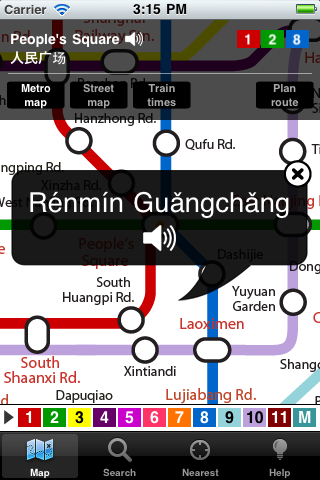
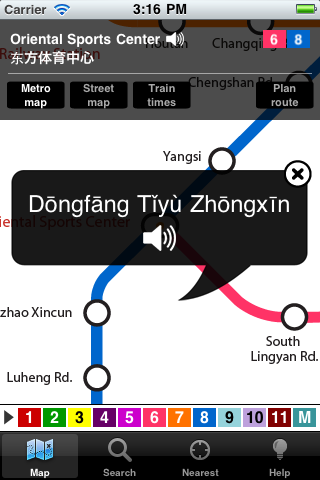
We've already added the Pinyin pronunciations to the Shanghai Metropedia pages. We'll be launching the feature for our Shanghai app soon, followed by our other China metro apps.
Helping you get to your destination faster, and learn some Chinese en route :)
CNNgo have published a list of their 10 best apps for living in Shanghai, and Explore Shanghai is ranked #1 :)
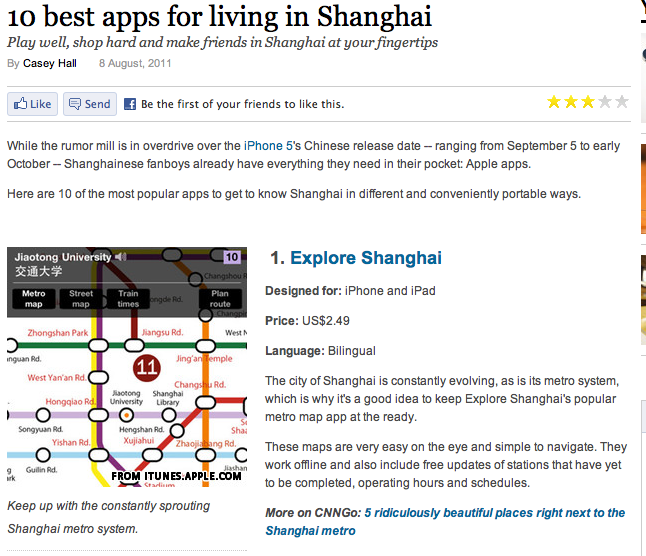
Read the full article on CNNgo for the full list